Most AI features get opened once, admired and forgotten. Four or five of them ended up in how we work every day. This is that shorter list.
1. Transcription and text-based editing
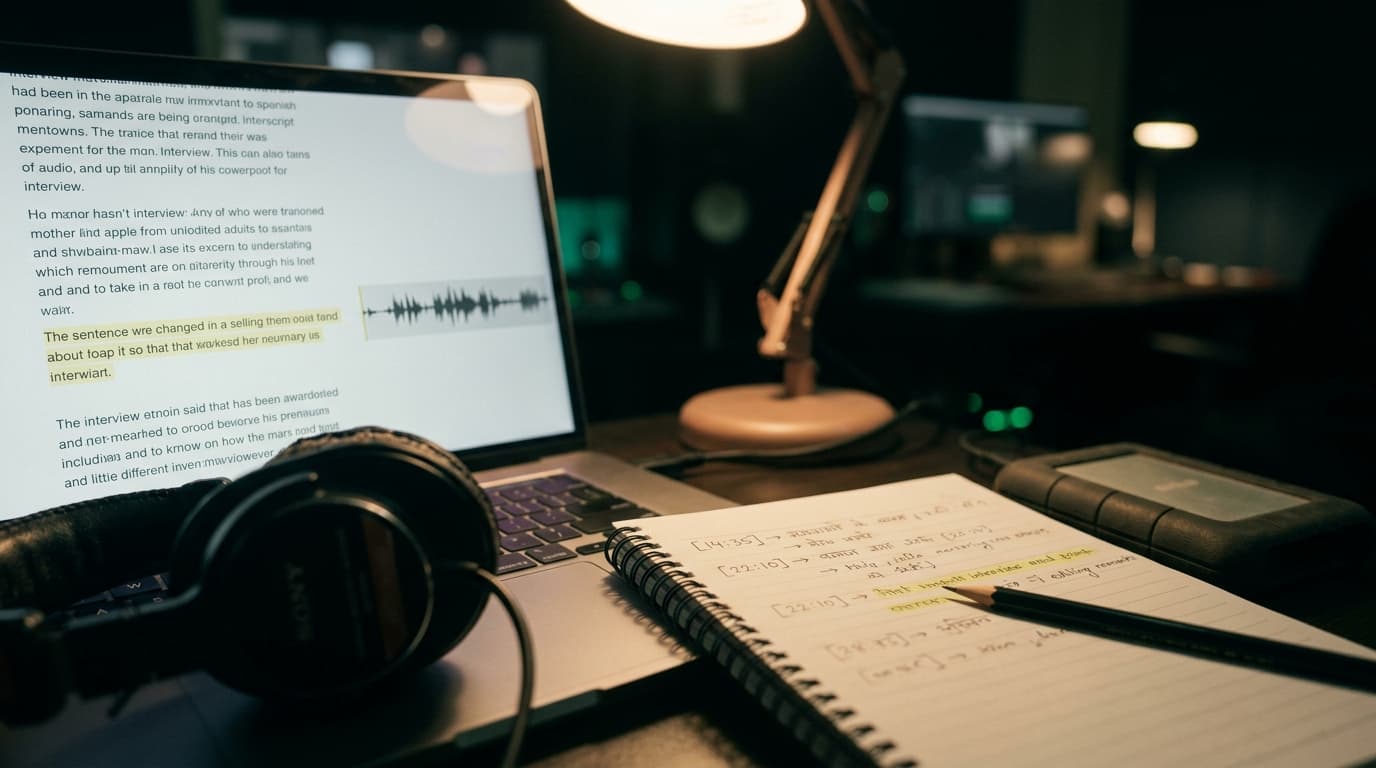
This is the biggest time-saver by a mile. We shoot a lot of interviews and podcasts, and being able to search an hour of footage for the moment someone says 'the first time we tried it' is ridiculous. We build our paper edit from transcripts now and only then touch the timeline.
2. Voice isolation and dialogue cleanup
Kathmandu is loud. Horns, generators, a dog that always starts barking on take three. Modern voice isolation won't save a truly bad recording, but it turns a 'we have to reshoot this' into a 'that's fine' more often than we'd like to admit.
“It's a safety net, not a plan. I still want a boom and a lav on every interview. But when the street decides to join the take, I'm glad it's there.”
3. Object masking in the grade
Tracking a mask on a face or a product used to be slow roto work. AI masking in Resolve gets us 90% of the way in seconds, which means we actually do the subtle local adjustments we used to skip.
4. Upscaling and frame interpolation
Clients hand us old phone footage, a 720p archive clip, a drone shot at the wrong frame rate. AI upscaling and interpolation make these usable inside a modern edit. We use them sparingly; push too hard and faces start to look waxy.
5. Temp voiceover
Synthetic voices are great for scratch VO. The client hears the pacing of the script before we book talent. Final voiceover is always a human, and we tell clients that up front.
“A temp voice changed how scripts get approved. People don't read timing on paper. They hear it and go, 'oh, that's too long.' Saves a whole round of notes.”
What we uninstalled
- Auto-edit tools that promise a finished cut. They cut on beats, not on meaning.
- One-click 'cinematic' grades. They make everything look like the same film.
- AI captions with no review step. They will spell your client's brand name wrong.
The pattern is that AI is good at the mechanical parts of post and bad at taste, so we keep a person on every decision a viewer will feel. For generation rather than cleanup, we compared Higgsfield, Runway, Kling and Veo on real jobs.
Questions people ask
Which AI tools are actually worth using for video editing?
The ones we open every week: transcription and text-based editing, voice isolation for dialogue, AI object masking in the grade, upscaling and frame interpolation for old footage, and synthetic voices for scratch voiceover.
Can AI clean up bad audio in a video?
Voice isolation can rescue dialogue recorded on a noisy street, but it will not save a genuinely bad recording. We still put a boom and a lav on every interview.
Do you use AI voiceover in client videos?
Only as temp voiceover, so a client can hear the pacing of a script before we book talent. Final voiceover is always a human, and we say so up front.
What AI editing tools did you stop using?
Auto-edit tools that promise a finished cut, one-click cinematic grades, and AI captions with no review step. The first two cut on beats instead of meaning, and the third will spell a client's brand name wrong.
Planning a shoot? Tell us about it — or see what we've made.