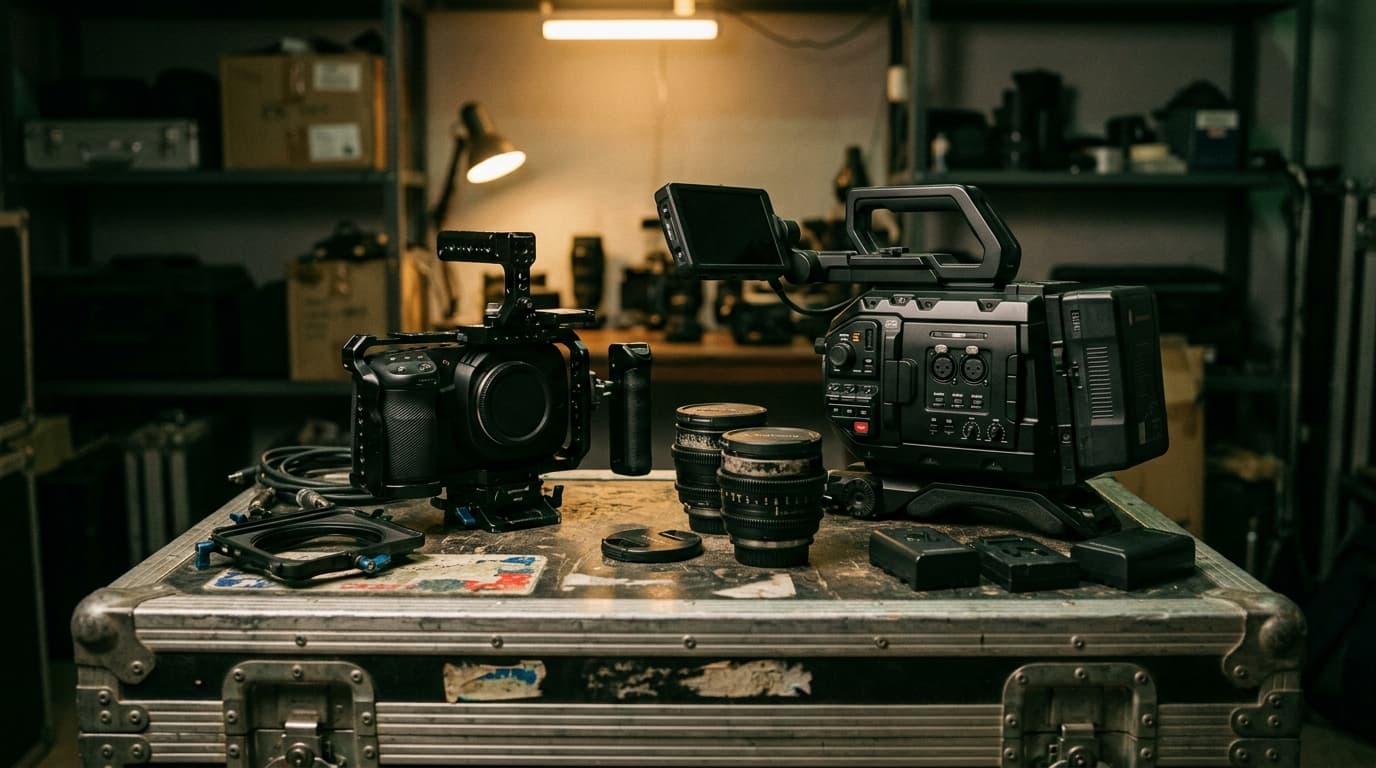
We get asked this more than any other gear question, usually by people deciding which one to buy first. We run both, often on the same day, so here's how they actually split the work.
Where the FX3 wins
- Size. It goes on a small gimbal, in a car rig, on a drone-style mount, in a tight shop aisle.
- Discretion. Nobody in a busy Kathmandu street looks twice at it.
- Travel. When the crew is flying to Nepalgunj with carry-on only, it comes.
- Price. It leaves more budget for lenses, light and sound, which matter more.
Where the FX6 earns its weight
- Built-in ND. Changing exposure outdoors without swapping filters is a huge time-saver.
- Proper XLR audio and handles, so interviews and run-and-gun doc work are faster.
- Ergonomics on long days. It sits on the shoulder and stays there.
- It looks like a 'real' camera, which, honestly, helps with some clients.
“For interviews and anything handheld all day, the FX6. For gimbal, car and anything tight, the FX3. They match closely enough that we cut them together without anyone noticing.”
If you can only buy one
Most small crews should start with the FX3 and spend the difference on good glass, a decent light and a proper microphone. Add an FX6 when interviews and long handheld days become the bulk of your work.
“Clients don't pay for the camera body. They pay for the film. I'd rather see that money go into an extra shoot day than a heavier camera.”
What matters more than the body
Light, sound, lenses, and a crew that knows the kit blind. We've seen phones beat cinema cameras when the person holding the phone knew what they were doing. Buy the camera last.
Questions people ask
Is the Sony FX3 good enough for professional work?
Yes. It's widely used on commercials, documentaries and films. Its main limits are ergonomics and the lack of built-in ND, not image quality.
What's the main difference between the Sony FX3 and FX6?
The FX6 adds built-in variable ND, XLR audio inputs and better ergonomics for long handheld days. The FX3 is smaller, cheaper and easier to rig on gimbals and in tight spaces.
Planning a shoot? Tell us about it — or see what we've made.