A year ago I was genuinely worried. Clients were sending us AI clips with notes like 'can we just do this?' and I didn't have a great answer. Now I do, and it's not the one I expected.
What changed: the start of the job
Pre-production got faster and more visual. Storyboards that took Prashesh two days now take an afternoon. Location ideas get mocked up before anyone gets in a jeep. Clients see the film earlier, and they argue less later.
“The best thing AI did for us is kill the 'I imagined it differently' conversation on shoot day. By the time we roll, everyone has already seen roughly what we're making.”
What changed: budgets
Some things got cheaper. Previs, mood films and a few VFX shots that used to need a specialist. That saving usually goes back into the shoot: an extra day, better lenses, a proper gaffer. Clients like that trade.
What didn't change at all
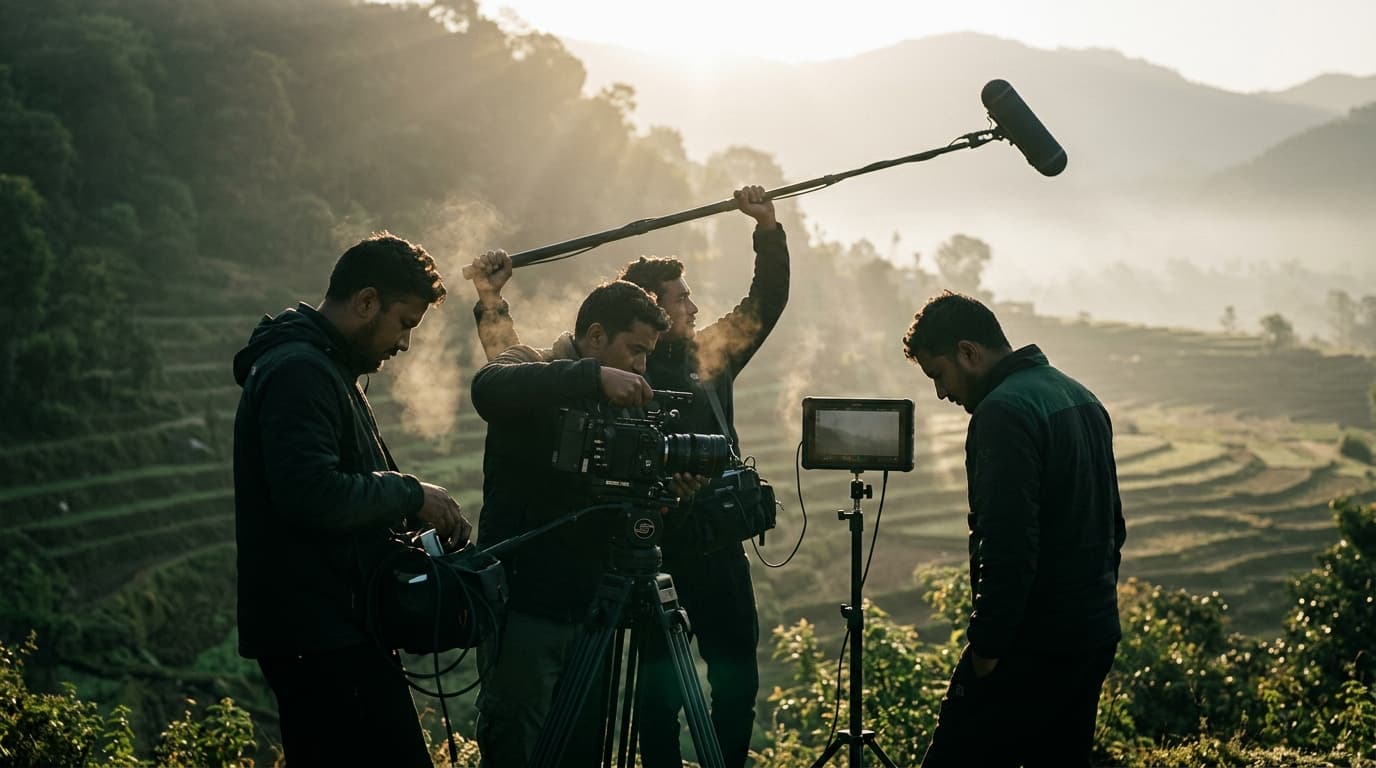
- Someone still has to stand in a paddy field at 5:30am waiting for the right light.
- Real people still don't act like prompts. Directing a nervous founder is a human job.
- Brands still need their actual product, store, team and customers on screen.
- Sound. Always sound.
“The camera is the smallest part of a shoot. It's permits, power, weather, a crew that trusts each other. None of that lives in a model.”
How we talk to clients about it now
We tell them exactly where AI shows up in their project, and where it doesn't. Pitch and previs: yes. Clean-up and temp VO: yes. Their product, their people, their final film: shot for real, unless they ask otherwise and sign off on it.
Being upfront has won us more work than it has lost. People want to know what they're paying for.
If you run a small studio
Learn the tools. Use them where they save you real hours. Then spend those hours on the parts of the job nobody can automate: the idea, the people and the day on set.
Planning a shoot? Tell us about it — or see what we've made.